
Cameroon has taken an important step in understanding the state of its HIV epidemic with the release of the Cameroon Population-based HIV Impact Assessment (CAMPHIA) 2024 – 2025. Conducted between September 2024 and January 2025, the nationwide household survey provides the most comprehensive picture yet of where the country stands in its response to HIV and where more effort is still needed.
The findings present a mixed picture. While treatment outcomes have improved significantly and Cameroon has achieved two of the three global HIV treatment targets, thousands of people are still becoming infected every year, many remain unaware of their HIV status, and women continue to shoulder the greatest burden of the epidemic.
A Nationwide Snapshot
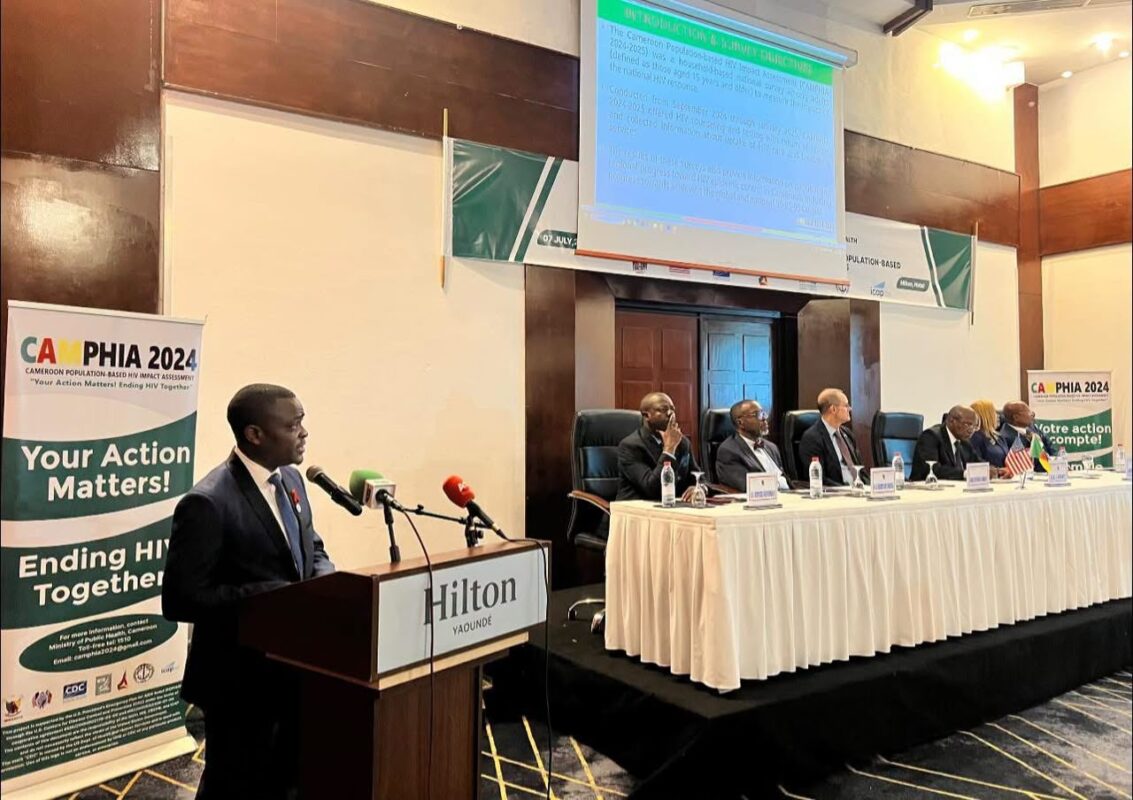
CAMPHIA surveyed households across all regions of Cameroon over five months. 40 field teams visited communities nationwide, collecting information through household and individual questionnaires while offering HIV counselling, testing and laboratory analysis to consenting participants.
The survey initially targeted 15,360 households. Of the 13,555 eligible households identified, 88.2% completed the household interview. Among 29,029 eligible adults aged 15 years and above, 25,083 people – including 13,498 women and 11,585 men – were interviewed and tested for HIV, resulting in an overall response rate of 76.2%. Participants who tested positive also underwent additional laboratory testing, including viral load measurement, CD4 count and other analyses to better understand treatment outcomes and recent infections.
More than half a million adults living with HIV in Cameroon
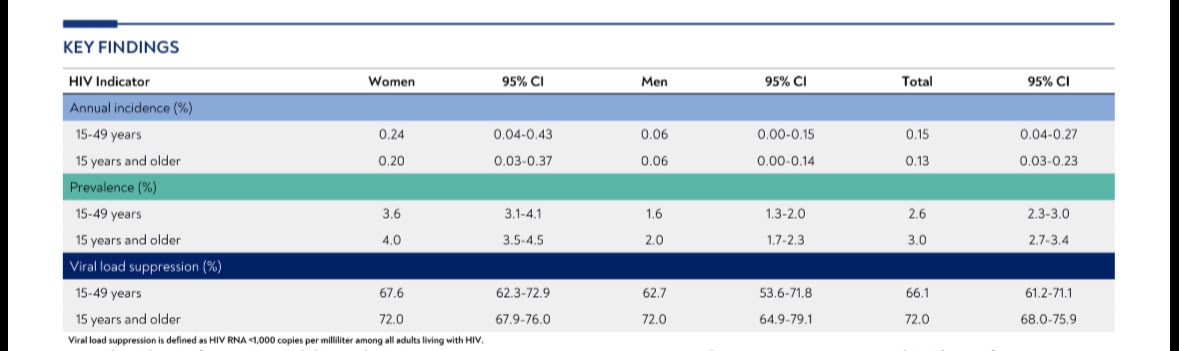
The survey estimates that approximately 501,000 adults aged 15 years and above are living with HIV in Cameroon. Among adults aged 15 to 49 years, HIV prevalence stands at 2.6%, while prevalence among all adults aged 15 years and older is 3.0%. Although the national prevalence has remained relatively stable over the years, the data shows that HIV continues to represent a significant public health challenge requiring sustained prevention, testing and treatment efforts.
Beyond measuring how many people are living with HIV, CAMPHIA also estimated how many adults become infected each year. The survey estimates approximately 21,000 new HIV infections annually among adults, with an annual incidence of 0.15% among adults aged 15–49 years.
Perhaps the most striking finding is who is most affected.
Nearly three out of every four new HIV infections occur among women, underscoring the continued vulnerability of women and adolescent girls in Cameroon. HIV prevalence among women aged 15 to 49 years is 3.6%, more than double the 1.6% recorded among men of the same age group.
The disparity is particularly evident among adults between 20 and 39 years, where women consistently record higher HIV prevalence than men. Among older adults, women aged 50–54 years recorded the highest prevalence at 8.3%, compared with 5.1% among men in the same age group.
These findings reinforce the importance of strengthening HIV prevention programmes that specifically target women and adolescent girls while addressing the social and structural factors that increase their vulnerability.
HIV is not evenly Distributed in Cameroon
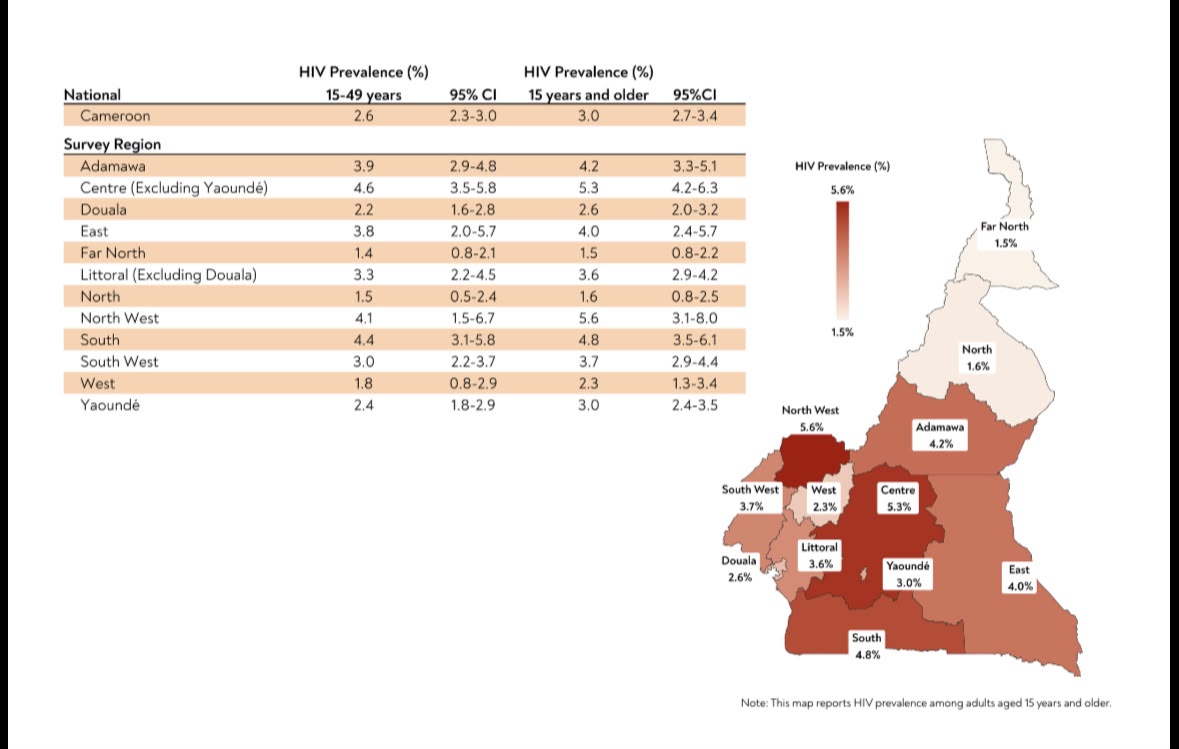
The survey also reveals important regional differences. The North West Region recorded the highest HIV prevalence among adults aged 15 years and above at 5.6%, followed by the Centre Region excluding Yaoundé at 5.3%.
Other regions with prevalence above the national average include the South (4.8%), Adamawa (4.2%), East (4.0%), South West (3.7%), and Littoral Region excluding Douala (3.6%). Meanwhile, the Far North recorded the lowest prevalence at 1.5%.
The survey analysed Yaoundé and Douala separately from the rest of the Centre and Littoral regions because the country’s two largest cities have different demographic and epidemiological characteristics from surrounding areas. Interestingly, Yaoundé (3.0%) and Douala (2.6%) recorded lower HIV prevalence than the surrounding Centre and Littoral regions.
The regional differences suggest that Cameroon cannot rely on a one-size-fits-all HIV response. Instead, prevention strategies will need to be tailored to communities carrying the greatest burden.
Progress made in HIV Management and Treatment
One of the strongest messages from CAMPHIA 2024/2025 is that Cameroon has made substantial progress in ensuring people who know they are living with HIV receive treatment. The country has successfully achieved the second and third UNAIDS 95-95-95 targets.
Among adults who know they are HIV-positive, 96.4% are receiving antiretroviral therapy, while 95% of those on treatment have achieved viral suppression, meaning the amount of virus in their blood has been reduced to very low levels.
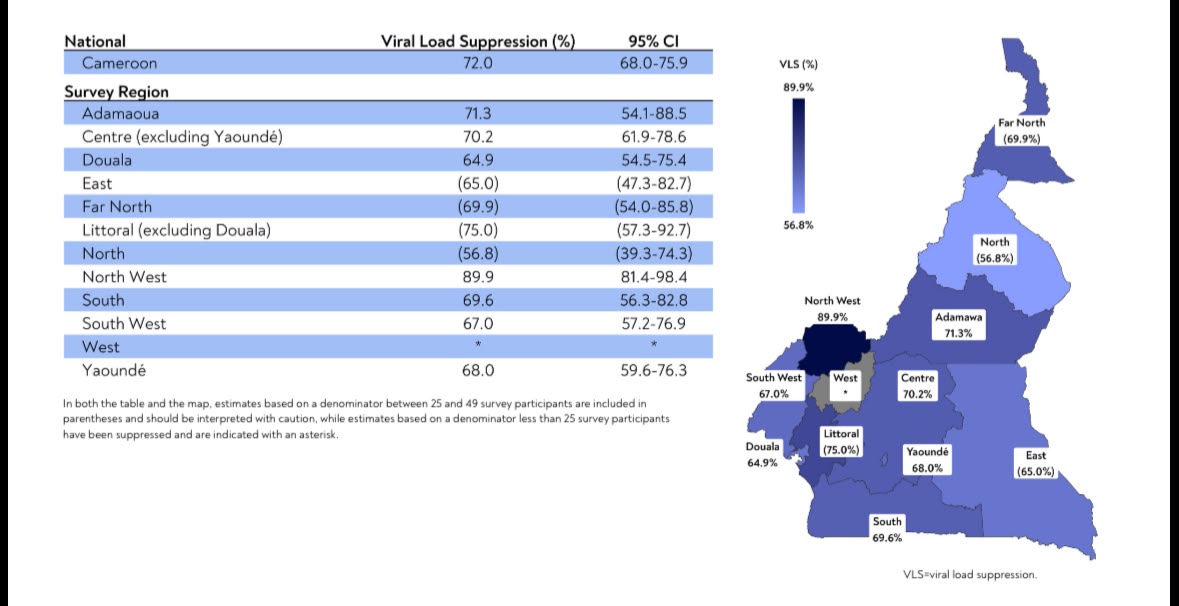
These findings point to strong treatment programmes, good linkage to care and effective antiretroviral medicines once individuals are diagnosed.Population-level viral load suppression – which includes everyone living with HIV, regardless of whether they know their status – is estimated at 72% nationally, although it varies considerably by age and region.
The first 95 remains the biggest challenge. Despite encouraging treatment outcomes, the survey identifies one major obstacle to ending the HIV epidemic. Only 77.1% of adults living with HIV know their status. In practical terms, that means about three out of every four people living with HIV know they are infected, while roughly one in four remain unaware.
Without diagnosis, individuals cannot begin life-saving treatment and may unknowingly continue transmitting the virus.
The report therefore identifies expanding HIV testing and active case finding as Cameroon’s top priority for accelerating progress toward epidemic control. It also notes that both CAMPHIA and UNAIDS estimates point to the first “95” – awareness of HIV-positive status – as the country’s most significant remaining gap.
Looking ahead
The findings provide policymakers with a roadmap for the next phase of Cameroon’s HIV response.
The report recommends strengthening community-based HIV testing, improving early diagnosis among both women and men, expanding prevention efforts for women and adolescent girls, and focusing additional resources on regions carrying the highest HIV burden.
It also highlights ongoing efforts to improve case finding through district-based community programmes, including antenatal services aimed at preventing mother-to-child transmission of HIV, syphilis and hepatitis B.
Ultimately, CAMPHIA 2024–2025 delivers a message of cautious optimism.
Cameroon has demonstrated that treatment works. Once people are diagnosed, nearly everyone starts treatment, and almost all those on treatment successfully suppress the virus. The next challenge is ensuring that the people who still do not know they are living with HIV are reached through testing, linked to care early and supported throughout treatment.
The data shows where the country stands today. The next chapter will depend on how effectively those findings are translated into action.
By Gladys Asu Ngouana